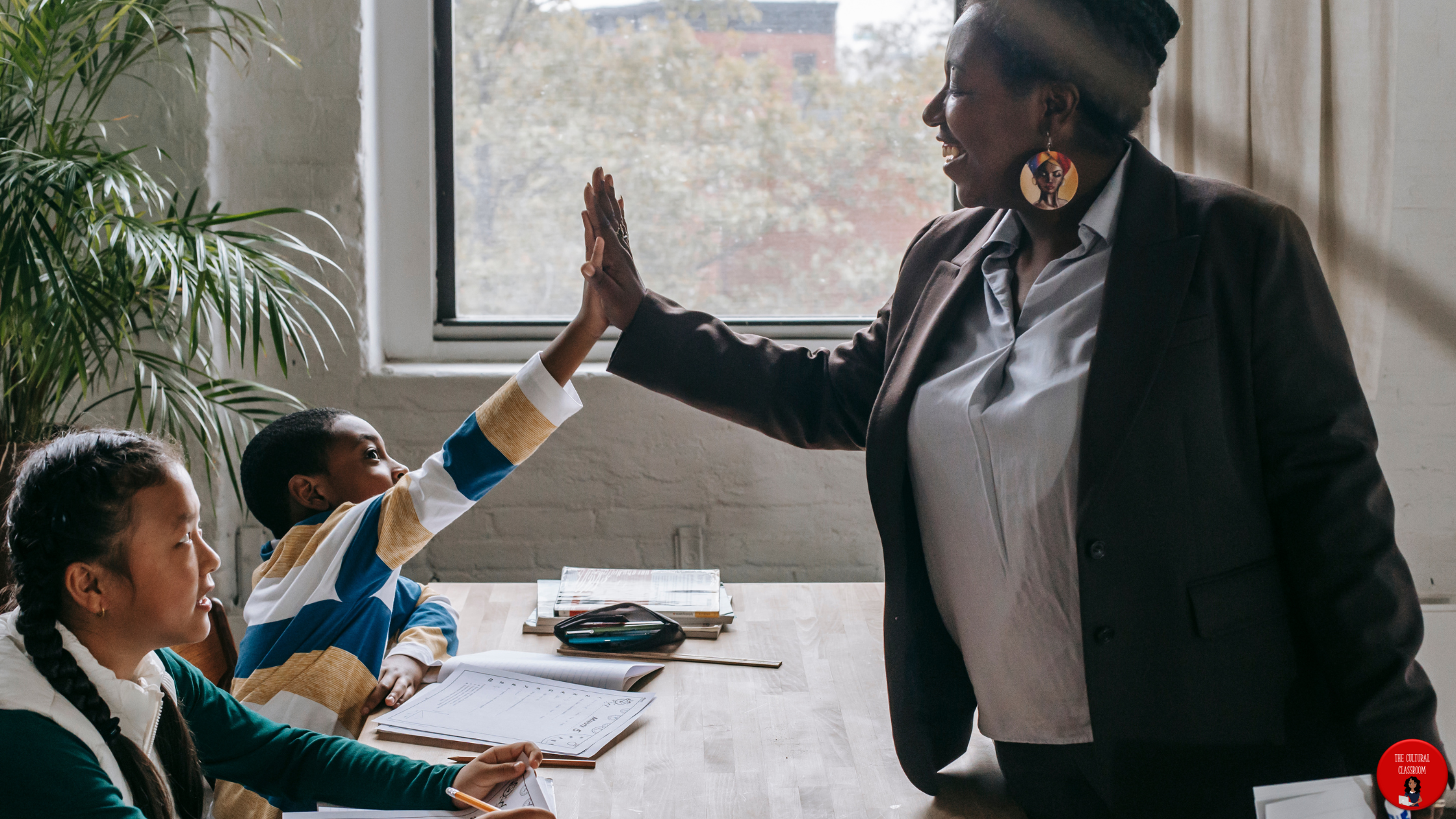
Decolonizing your Spanish classroom isn’t about being perfect or checking boxes. It’s about re-centering voices that have been historically left out and creating a space where students can connect more deeply—to themselves, each other, and the world. 💃🏽 Resources included.

Here’s what that can look like in real life:
1. 🌍 Shift Away from the “Madre España” Mentality
Let’s be real: a lot of Spanish curriculum still centers Spain, whether they realize it or not—through history, dialect, literature, and more. While Spain is part of the picture, there’s so much more to explore.
- Highlight Latin America and the Caribbean – Make space for stories, music, and culture from regions your students may not know about yet. Think Afro-Latino history, Indigenous perspectives, and contemporary voices from across the diaspora. [Related->consider highlighting the Indigenous peoples of the lands that you study with this tool: https://native-land.ca/]
- Rethink “foreign language” – In the U.S., Spanish isn’t foreign for many of our students. It’s a heritage, a home language, or something they hear every day. Embracing that can shift the way we teach.
- Challenge old-school methods – If your curriculum only celebrates one “correct” accent or ignores Indigenous languages, it’s time to shake things up. [Related->Blog post: “Why Teach About Indigenous Peoples”]
2. ✨ Center Diverse Voices + Student Stories
When we make room for a wider range of cultural expressions, everything changes.
- Include music, art, and literature from Indigenous, Afro-Latino, Asian-Latino, Arab-Latino and Latin American creators—not just the textbook “classics.”
- Let students show up fully – Celebrate Spanglish, dialectal differences, and the lived experiences of your students.
- Say their names – Literally and figuratively. Highlight Indigenous languages and give them the respect they deserve.
3. 🔍 Rethink Curriculum + Assessments
If the materials we use are biased, so are the outcomes. Let’s switch it up.
- Audit your syllabus – Whose stories are missing? Add voices that reflect the diversity of the Spanish-speaking world. You can do this with the help of multimedia, art, warmups, etc.
- Reimagine assessments – What if students could demonstrate learning through art, interviews, or cultural projects instead of just multiple-choice? [Related->Blog post “How One Project Changed Everything: Lessons from My Cultural Classroom”]
- Talk about justice – Colonialism, racism, and inequality aren’t side notes—they’re essential to understanding Latin American history and culture. [Related->Blog post on how to incorporate social justice in your classroom]
4. 💛 Build an Inclusive + Empowering Space
At the heart of all this is your classroom community.
- Create a space where all students feel seen – Language learners, heritage speakers, Indigenous students—everyone. [Related->podcast with the World Language Classroom on making your classroom warm and welcoming]
- Break down stereotypes – Whether it’s about dialects, countries, or identities, challenge harmful narratives with truth and compassion.
- Give students agency – Let them lead, share, and explore. When they feel ownership, the learning goes deeper.
This isn’t about doing everything at once—it’s about starting somewhere and building from there. Every small shift adds up.
Want help getting started? I’ve got resources, lesson ideas, and a community ready for you. I also have a library of videos for you to learn from! You don’t have to do this alone. 🤗. Also consider my Afro-Latino Heritage Course, taught by me, meant to give you practical ways to implement and highlight Afro-Latinos in your classes.

Resources
Slides from my 2025 Keynote Presentation at the Unmuted: Language Justice Summit
Keynote Centering Justice: Rethinking The WL Classroom by Allison Perryman- Included in the slides are book and website recommendations
- More tips and guidance on centering your classroom for justice
- Additional:
- Recommended books/audiobooks
- Recommended podcasts
